Best Restaurants in the West Village: The Local Guide
A local's honest strategy for finding a table in a neighborhood where the good rooms don't bother with a sign.
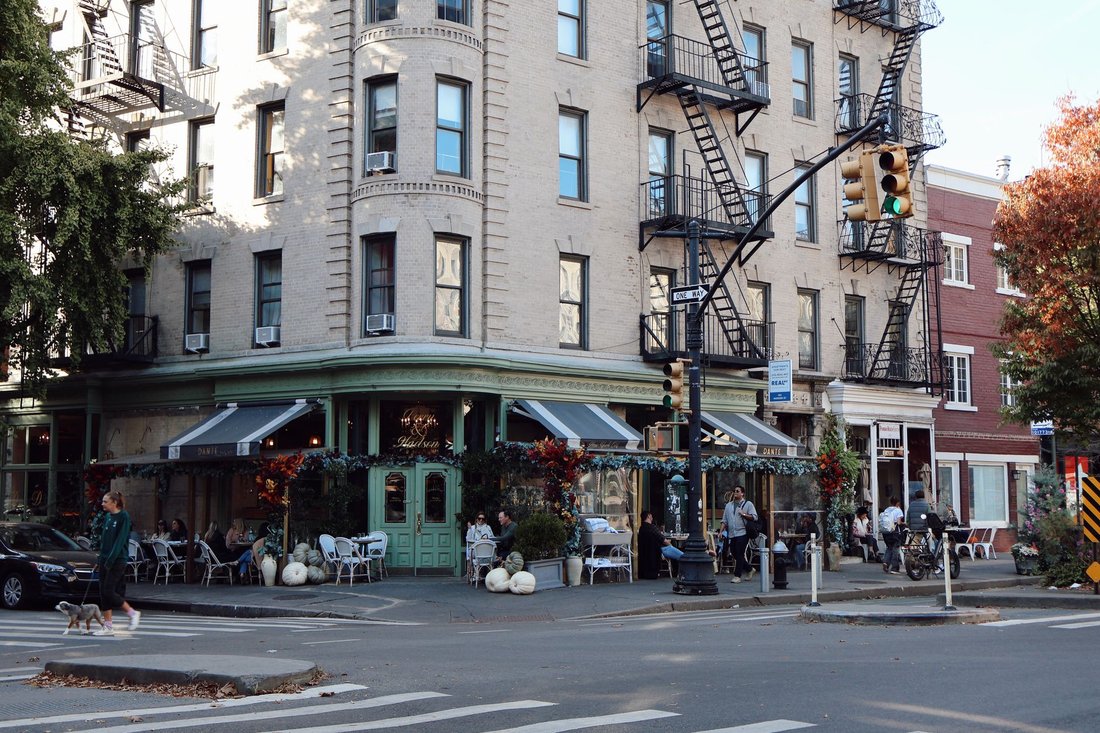
Bleecker Street won't run straight for more than three blocks before it bends into Christopher, and Grove crosses itself somewhere near Waverly in a way that still confuses people who've lived here for twenty years. That tangle is exactly why eating well here takes strategy. The best restaurants in the West Village are almost never on the corner you'd expect. Half of them carry no sign, just a number screwed into a brownstone door and a hostess stand you can't see from the sidewalk until you're standing in front of it. Locals learn these streets by learning where they've eaten. That's the real map of the neighborhood, drawn one dinner at a time.
The Best Restaurants in the West Village Reward Patience
Most dining rooms here sit ten or twelve tables deep, tucked into what used to be a parlor floor or a carriage house. Ceilings run low. Candles do most of the lighting. Nobody is trying to turn your table twice in an hour, which means a reservation at 7pm can run past 9:30 without anyone hovering. This is date-night territory by design: couples who've been coming to the same handful of rooms for a decade, waiters who remember how you like your wine poured, menus that change with the season rather than chase a trend. Cornelia Street, Grove Street, and the blocks around Bedford carry the highest concentration of these small, serious kitchens, and walking between them on a weeknight is its own kind of entertainment even before you sit down.
Playing the Reservation Game
Getting a table on a Friday or Saturday night takes planning. Popular spots release reservations two to four weeks out, and the good slots go within minutes of dropping. The workaround most regulars use is simpler: eat early or eat late. A 5:30 seating or a 9:45 one opens up far more easily than anything in between. Bar seats are the other move. Many of the neighborhood's best kitchens keep a handful of stools open for walk-ins only, no reservation required, and a plate of pasta eaten at the bar with a glass of something poured by someone who actually knows the list can beat the dining room experience anyway. Check a restaurant's own site the day of, too. Cancellations post there before they show up anywhere else.
What the Neighborhood Actually Eats
West Village dining skews intimate rather than loud. Classic bistros with zinc-topped bars and a short, confident wine list define a lot of the corners south of Christopher Street. Red-sauce Italian rooms, the kind with checkered tablecloths and a garlic knot basket that shows up before you've ordered, have outlasted three decades of trend cycles and still fill up on Sunday nights. Natural wine bars have multiplied over the last several years, most of them small enough that you end up talking to the people at the next table whether you meant to or not. Mornings belong to the cafes: a coffee and something out of the pastry case, read at a two-top by the window while the block wakes up. Citywide staples matter here too. A good bagel or a proper slice isn't hard to find if you know where to look, and a slice nearby is often just a few doors from wherever you end up eating dinner.
Streets Worth Wandering First
Cornelia, Grove, Bedford, and Christopher toward the water are the four blocks that reward slow walking. The cobblestones get real again as you close in on the Meatpacking edge, and that stretch holds some of the best late-night energy in the neighborhood, good for a nightcap after dinner runs long. None of these streets follow the numbered grid uptown, which is the point. You're not supposed to be able to predict what's around the next bend.
- Book two to four weeks ahead for Friday and Saturday dinner at any well-known room.
- Aim for a 5:30 or 9:30 seating if the prime-time slots are gone.
- Ask about bar seating. Many kitchens hold walk-in-only stools even when the dining room is booked solid.
- Check the restaurant's own reservation page the day of for late cancellations.
- Weeknights are far easier than weekends, especially Monday through Wednesday.
The takeaway is straightforward. The West Village doesn't reward restaurants that try to do everything. It rewards the small room that does three or four dishes exceptionally well, keeps the same staff for years, and treats a Tuesday dinner with the same care as a Saturday one. Show up with a plan, or show up willing to stand at a bar for twenty minutes, and the neighborhood will feed you better than almost anywhere else in the city.