Best Bars in the West Village: The Local Guide
The West Village doesn't do bar crawls in a straight line, and that's the entire point: here's how a local actually chooses where to drink on streets that refuse to follow the grid.
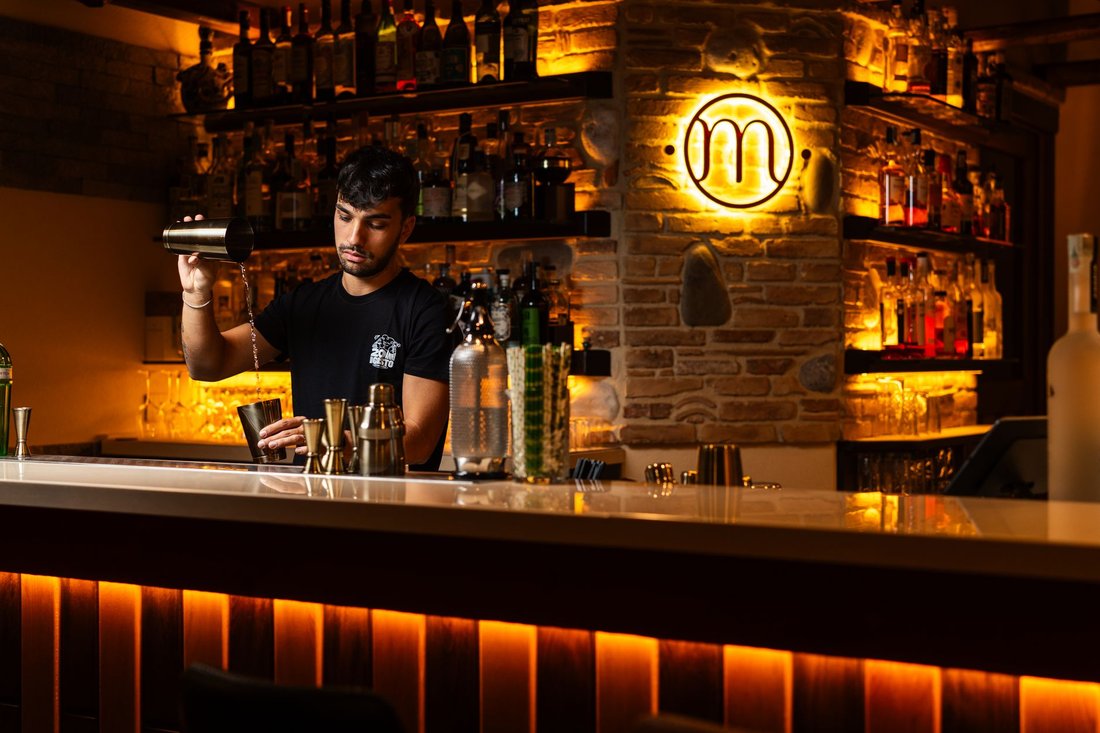
Ten o'clock on a Thursday and Grove Street bends where it shouldn't, spitting you out onto a block you could swear you already passed twice. A door with no sign glows faintly under a stoop a few steps below sidewalk level. Behind a brownstone facade with the curtains drawn, someone cracks ice against a shaker, and you can hear it through the glass. Nobody flags a cab here anymore. They just walk, phone dark, half-lost, because getting turned around is part of the ritual of hunting the best bars in the West Village. Ask five people who live south of 14th Street where to drink and you'll get five different answers pointing in five different directions, and all five will be right. That's the neighborhood working as designed.
Most of Manhattan snapped into a grid in 1811. The West Village didn't get the memo, and it never really tried to catch up. The result is a neighborhood where Waverly Place crosses itself, where West 4th Street intersects West 10th and West 11th and West 12th like some cartographer's joke, and where a bar can sit twenty feet from a major avenue and still feel like a secret because you'd never stumble onto it without meaning to. That geography is the whole story of drinking here. You don't bar-hop the West Village in a line. You wander it, and the wandering is the draw.
Why the best bars in the West Village reward getting lost
The neighborhood carries real history that shapes what a night out means here. Christopher Street and the blocks around it are where the modern gay rights movement took its first stand in 1969, and that history isn't a plaque you walk past, it's still in the air on a summer night when the sidewalks fill up outside the older bars near Sheridan Square. Drinking in the West Village has always meant drinking somewhere that mattered to somebody before you got there. That's different from a neighborhood built on novelty. It changes what people expect from a good bar: not the newest thing, but the realest one.
Low-rise brownstones and converted townhouses mean most West Village bars aren't built to be seen from the street. Basements and parlor floors do double duty as bar rooms, wine cellars stand in for back rooms, and a lot of the best drinking happens below grade, down a short flight of steps, past a door that gives you nothing to go on. If a place is loud enough to hear from outside, it's probably not the one you're looking for.
Old-guard taverns
Somewhere on nearly every winding block sits a tavern that's been serving the same neighborhood since before your grandparents' era, wood-paneled, low-lit, unbothered by trends. These are the anchors. Regulars have their stools. The bartender knows the pour without being told. You go here when you want a drink that doesn't require deciding anything, in a room that's been getting this right since long before craft cocktails had a name.
Dive holdouts
The Village had a rougher edge once, and a handful of unfussy, cash-friendly, jukebox-and-pool-table dives survived the decades of rising rent around them. They're getting rarer, not gone. Finding one is less about a list and more about noticing the bar with a hand-lettered sign, a door propped open in warm weather, and a crowd that looks like it wandered in off the actual block rather than off a map app.
Cocktail dens and basement rooms
This is where the neighborhood's crooked layout does its best work. Serious cocktail bars here tend to hide, often literally underground, sometimes behind an unmarked door or through what looks like someone's front hallway. The format rewards patience: a short, deliberate menu, ice that's been thought about, a bartender who asks a question or two before making your drink instead of handing you a laminated card. If you're chasing a particular classic done with real technique, this is the register to look in.
Natural wine and sidewalk cafes
Wine culture runs deep on these blocks, and it shows up two ways. One is the casual, glass-lined sidewalk cafe, good for watching the street do its thing over a carafe. The other is the small, serious wine bar with a chalkboard list and a sommelier-minded owner who can walk you through a natural wine list built around small producers and low-intervention bottles rather than big-name labels. Both belong to the neighborhood; they just serve different moods.
Jazz rooms and piano bars
Live music still has a real foothold south of 14th Street, a holdover from when the Village was the city's downtown music scene, not a marketing phrase. A handful of rooms still book piano players and small combos most nights of the week. These aren't background-music bars. People come, sit, and listen, and the etiquette matters: keep the conversation down, tip the tip jar, stay for a full set if you can.
How to actually choose, by mood
- Want conversation with strangers and no pretense: find the tavern with the longest bar and the shortest wait for eye contact from the bartender.
- Want a serious drink made with care: look for the unmarked door, the short menu, and a room that doesn't shout.
- Want wine and people-watching: sidewalk seating on a side street beats a corner spot on a main drag every time.
- Want music: check what night the piano player works before you go, and go for the set, not just the room.
- Want it cheap and unfussy: follow the jukebox sound bleeding onto the sidewalk, not the line out front.
The through-line across all of it: the West Village punishes convenience-seekers and rewards the curious. A bar with a line down the block on a Saturday is rarely the neighborhood's best version of itself. The better move, and it's one longtime locals will tell you without hesitation, is to treat the crooked streets the same way you'd treat a walk with no destination, picking a direction off Seventh Avenue South or Hudson Street and following whichever basement glow or open door looks worth ducking into. Get turned around near Bleecker and MacDougal, double back past a townhouse you didn't notice the first time, and let the neighborhood's refusal to follow a grid do what it's always done: slow you down long enough to actually find something good.
That's the real guide. Not a fixed list, because lists go stale and doors change hands, but a method. Walk slow, look down basement stairwells, trust the room without a sign more than the one with a velvet rope, and let a Thursday night in the West Village take longer than it needs to. It's supposed to.