Best Italian Restaurants in the West Village: A Local's Guide
The West Village has been feeding Italians, tourists, and rent-stabilized lifers for a century. Here is how to actually eat well there.
The streets in this part of Manhattan don't run on a grid. They bend and cross at odd angles, named after the tradespeople of an older city, the buildings low enough that you can see sky. On a winter night, gas lamps flicker against brownstone facades and the whole block looks like a stage set, except people actually live here, and some have eaten at the same Italian restaurants since their grandparents brought them as kids. The best Italian restaurants in the West Village sit inside that history, and the neighborhood's relationship with Italian food is among the most layered in the five boroughs.
Why the Best Italian Restaurants in the West Village Are Worth It
The West Village sits at the southwestern edge of Greenwich Village, which was historically one of the main Italian enclaves of lower Manhattan, a community that's largely dispersed but left behind a food culture that never fully left. What that means practically: there are restaurants here that have been open for decades, serving red-sauce classics in rooms that look almost exactly as they did in the 1980s. There are also newer spots leaning into regional Italian cooking, natural wine, handmade pasta, and the kind of pricing that reflects what it costs to run a restaurant on these blocks now.
Those two worlds coexist uneasily. The best Italian restaurants in the West Village are usually making a choice about which tradition they're serving. Understanding that divide is more useful than any top-ten list.
Old New York Italian vs. the New Wave
Old-school Italian-American cooking in this neighborhood means pasta in tomato-and-meat sauces, veal, chicken parm, and bottles of house red. The rooms tend to be small, warm, and candlelit. The service is fast and familiar. The check is more reasonable than you'd expect for the zip code, and it's the kind of red-sauce repertoire that built New York's Italian reputation in the first place.
The newer places skew regional, Emilia-Romagna one week, Sicily the next, and tend to obsess over pasta texture, sourcing, and wine lists that run deep on natural and low-intervention bottles. The rooms are often just as small, but louder and harder to get into.
Neither is more authentically Italian. Both can be excellent. Knowing which one you're walking into before you go matters more than the star rating.
How to Read the Menu
A few things separate a genuinely good Italian kitchen from a mediocre one in this neighborhood:
- Pasta made in-house matters more than the sauce. Fresh pasta that's been rolled and cut that day behaves differently on the plate. Ask if it's made in-house; most places worth going to will tell you immediately and proudly.
- The breadbasket is information. In a decent Italian room, it's there, it's good, and it's not charged to you separately.
- Wine by the carafe is a good sign. It means the restaurant trusts its pour and isn't trying to upsell every table to a bottle.
- A long menu is usually a warning. The best Italian kitchens in the West Village run focused: four or five pastas, two or three secondi, seasonal vegetables. A menu with thirty-five items is cooking from the freezer.
The Table Problem
This is not optional information: getting a reservation at the more celebrated Italian spots in the West Village is genuinely difficult. Some of the best rooms in the neighborhood have been booked two to three weeks out for years, and the situation has only gotten tighter since the pandemic reshuffled what people expect from dining out.
Strategies that work: walk in and eat at the bar, where most rooms keep a few seats and the menu is the same; go at 5:30 or after 9:30 on a weeknight; book two weeks ahead on whatever platform the restaurant uses and refresh it obsessively. Showing up early on a Tuesday has saved many meals.
The older red-sauce places tend to be less reservation-dependent. That's part of their value. You can decide you want pasta in cream sauce at 7 p.m. on a Friday and still get a table. Which is not nothing.
What to Order
Across the neighborhood's Italian restaurants, a few dishes are consistently worth prioritizing:
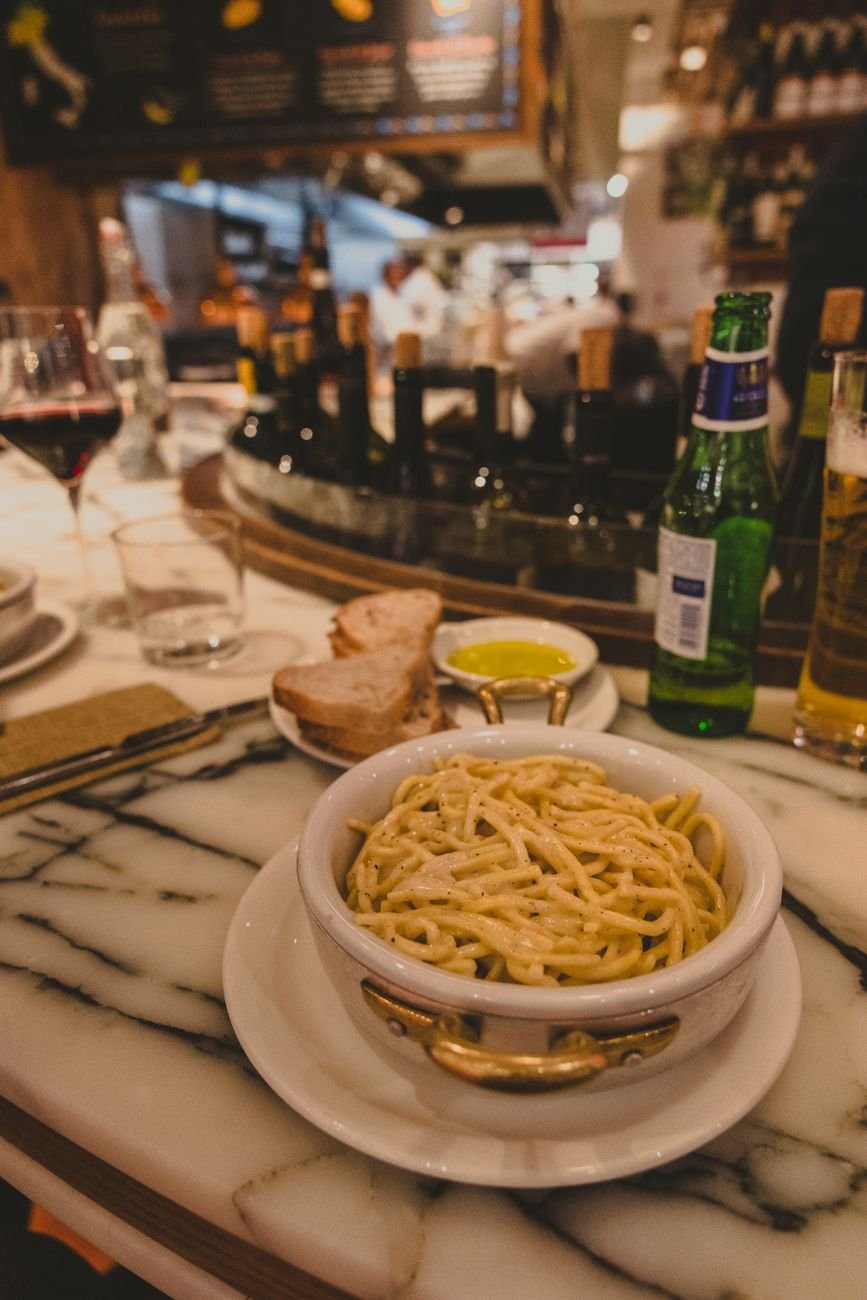
- Cacio e pepe, done well, is one of the harder things to execute correctly. The starch and fat have to emulsify without breaking, the pepper has to bloom. When a West Village kitchen gets it right, it's the kind of dish that makes you want to come back the following week.
- In the old-school rooms, chicken scarpariello or any braise that's been on the menu for twenty years is usually the safest order. The kitchen has made it thousands of times. Trust the repetition.
- Order the amaro at the end instead of dessert. Most places that care about their wine and spirits program have a considered amaro list, and it closes the meal better than tiramisu that's been sitting in the reach-in since morning.
Neighborhoods Within the Neighborhood
The West Village isn't uniform. The blocks closer to the Hudson tend to be more tourist-adjacent, especially in summer, when people drift up from the piers. Go east toward Seventh Avenue South and Bleecker and you're in the older, more residential part of the neighborhood, the part where people actually live and eat on weeknights, where the restaurants don't necessarily need a press hit to stay full.
Bleecker Street in particular has a long history as an Italian-food corridor. Some of that history is still legible in the storefronts. Walk the block before you decide where to sit down. Worth noting too: pasta lovers across the city make regular pilgrimages to this stretch, so don't expect a quiet room on a weekend.
The Honest Bottom Line
The West Village is an expensive neighborhood to run a restaurant in. The rents are real, the tourists are real, and the pressure to open a room that photographs well and fills up fast is real. Not every Italian restaurant in the neighborhood is good. Some are coasting on location and candlelight.
The places worth going to are the ones that feel like they're cooking for the people who live nearby: unhurried, consistent, clear about what they're doing. It might be an eighty-year-old room doing braised meats and house wine, or a thirty-seat spot that changes its pasta twice a week. The tell is usually the same. The room is full of regulars, nobody's performing for the room, and the pasta is good enough that you don't think about anything else while you're eating it.
That's what the West Village does at its best. The streets don't run straight, but the food, when it's right, is not complicated at all.