Where to Eat in the West Village: A Local's Guide
The West Village runs on cobblestones, good pasta, and the quiet confidence of a neighborhood that hasn't needed to prove anything in decades.
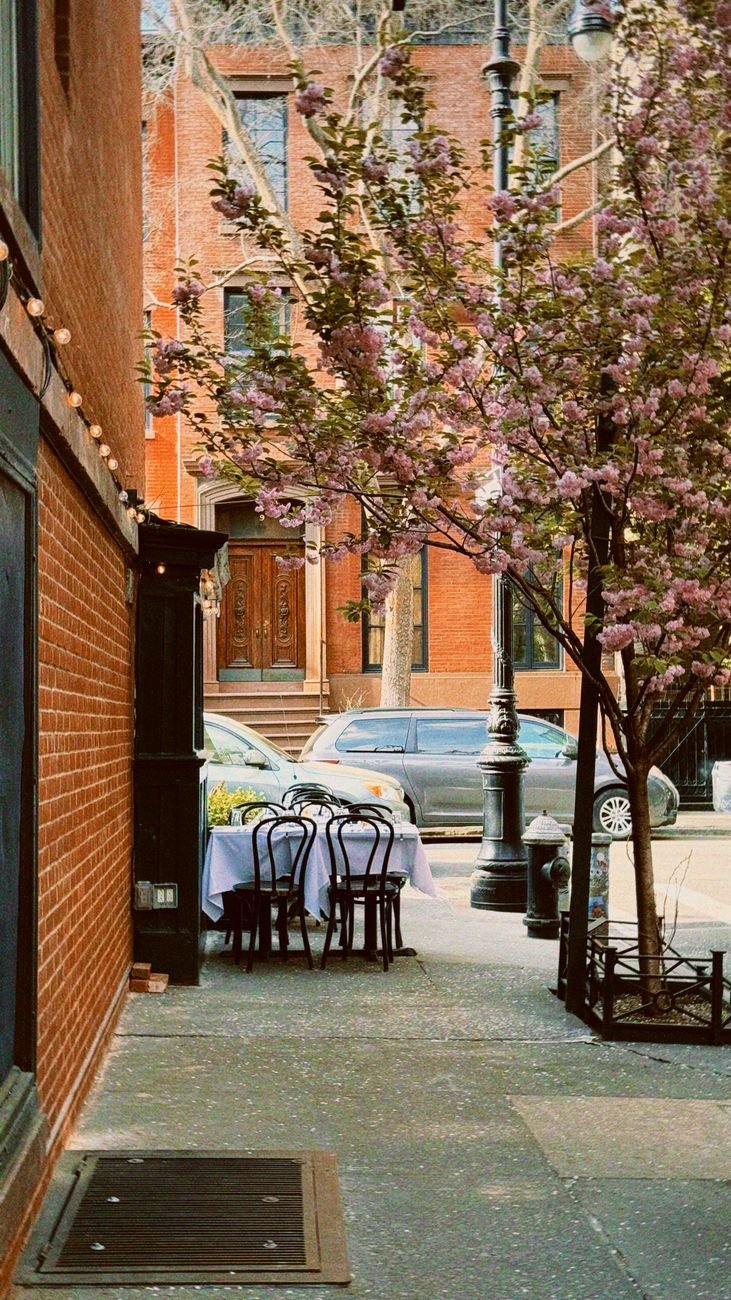
Christopher Street on a Tuesday evening: the light goes golden around seven, the trees on the side streets are actually trees, and people are walking slowly on purpose. That's the tell. The West Village is the one part of Manhattan where New Yorkers voluntarily decelerate. The restaurants here know it. Nobody is chasing the moment. The bet is that you'll stay.
Knowing where to eat in the West Village means accepting that the neighborhood will not cooperate with efficiency. The streets don't run on a grid. A block labeled "West 10th" crosses "West 4th." You will get briefly lost. This is, counterintuitively, the point. Some of the best meals here happen because you turned left instead of right and walked into something good.
How to Eat in the West Village
The neighborhood has been serving serious food since before "serious food" was a category. Classic Italian restaurants with red-check tablecloths have held their corners for generations. These are not ironic rooms. They have no concept. What they have is linguine, a room that feels like it was decorated in 1987 and never needed updating, and regulars who would notice if anything changed. Order the pasta. Drink the house red. Don't overthink it.
West Village Italian spans red-sauce institutions and spare, modern rooms where the pasta is handmade and the wine list leans Friulian. Both types are legitimate. The institution feeds you well for less money and more atmosphere. The modern room gives you a tasting-menu sensibility without necessarily the tasting-menu price. Know which one you want before you go, because the neighborhood has both and they are not interchangeable.
The natural wine scene here is real and has been for years. A handful of small wine bars have planted themselves on the quieter blocks, the kind of places with maybe fifteen seats, chalkboard lists that change week to week, and small plates designed to extend the evening. These are good spots for a weeknight when you don't want dinner exactly but you want more than a drink. You'll end up eating more than you planned. That's fine.
What the Neighborhood Does Well
Brunch in the West Village is a logistical challenge and a genuine pleasure, and those two facts are related. On weekends, the lines outside certain restaurants on Bleecker and Hudson stretch onto the sidewalk by ten in the morning. The food at many of these places is good enough to justify it. The eggs are done right. The coffee is serious. You'll wait forty minutes and not fully regret it.
The trick is to go early or go late. Show up at eight on a Saturday and you'll walk right in. Show up at noon and you're in the queue with everyone else who had the same idea and did not act on it fast enough. If you're visiting from another borough, the A/C/E to 14th Street or the 1 to Christopher Street drops you close enough to walk and shake off the subway before you sit down. For a deeper cut on the city's overall brunch landscape, the best brunch spots across New York are worth knowing before you commit to a two-hour wait anywhere.
Bleecker Street is the main artery and it earns the attention, but the side streets are where the neighborhood gets specific. Hudson Street has the density. Perry, Charles, Bank: quieter, more residential, with restaurants that feel like they were put there for the people who live on those blocks. You can tell the difference between a restaurant designed for foot traffic and one that assumes you already know it's there. The latter type is usually better.
A Few Practical Notes
Reservations matter here more than in many parts of the city. The rooms are small. A table for four on a Friday is not something you secure the same day at any place worth going to. Book a week out for weekends. For weeknights, same-day slots sometimes open up on reservation apps around five o'clock when people cancel. Worth checking.
The neighborhood is not cheap, but it is not uniformly expensive either. A pizza slice, a bodega coffee, a corner spot with counter seating and a rotating lunch special: these exist alongside the prix-fixe rooms. For a quick meal that costs very little, the slice situation on the avenues is solid. New York pizza in the West Village is not Bed-Stuy pizza or a Midtown lunch-rush situation, but a good fold is a good fold, and you can eat standing up on the street without feeling like you're doing something wrong. The best pizza in New York is an argument worth having, and the West Village has a stake in it.
One thing the neighborhood does particularly well is the late dinner. Restaurants here keep their kitchens open later than you might expect. Nine-thirty is not a problem. Ten o'clock is possible. This is a neighborhood where people live, go to the theater in the Meatpacking District or over in the Village proper, and come back hungry. The kitchens account for this. If you're coming from a show or walking over from the High Line, you will find somewhere to eat.
The Real Texture of the Place
The West Village carries its gay history in the architecture and in who still lives there, not just in the rainbow flags outside the bars on Christopher Street. The restaurants that have been here through multiple decades of the neighborhood's life are embedded in that history whether they make it explicit or not. There's a reason certain rooms feel like they belong to the people who use them regularly. They do.
The food is good here across a wide range of options. It's not the cheapest neighborhood to eat in. It's not always the easiest to navigate. But the meal you have on a small street at a table near the window, watching people walk past on a block that looks essentially unchanged for the last thirty years, is a specific and repeatable pleasure. The neighborhood gives that to you. Show up knowing what you want and it will deliver.