Best Food Halls in New York: A Local's Guide
Not every roof with ten kitchens under it deserves your Saturday afternoon, so here's how a local tells the real food halls from the mall food court with better lighting.
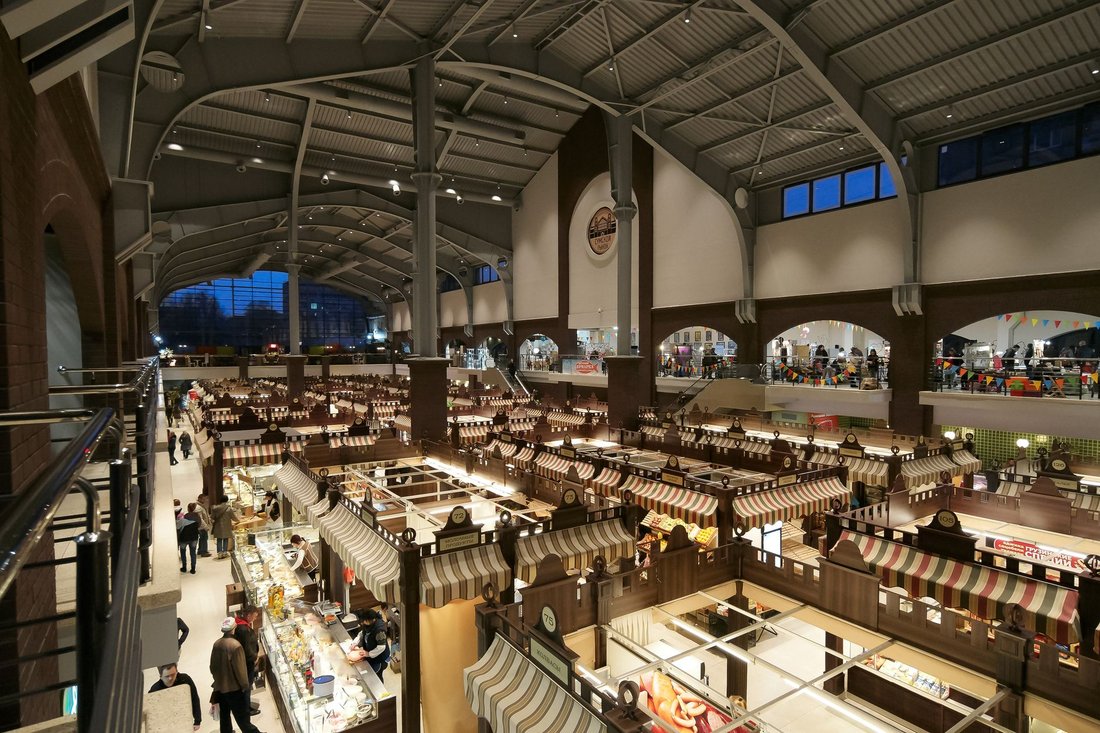
Chelsea Market on a Saturday afternoon means shouldering past a line that's already wrapped around the seafood counter before you've even decided if you want dumplings or a sandwich. That crush, more than any single stall, is what a food hall actually promises: a dozen kitchens under one roof, no reservation, no group text arguing for twenty minutes about where to eat. The best food halls in New York aren't judged by their prettiest counter or their tallest ceiling. They're judged by one thing: can you walk in hungry, undecided, traveling with people who want completely different food, and walk out with everyone fed and nobody compromising.
New York didn't invent the concept, but it perfected the version built for people who eat on the run between a train transfer and a work meeting. The dining concourse at Grand Central has been doing this since before anyone called it a food hall, feeding commuters who have four minutes before their platform gets announced. Essex Market on the Lower East Side grew out of the old pushcart markets that lined the neighborhood a century ago, before the building even had a roof over the stalls. Chelsea Market took a Nabisco factory and turned it into the version tourists know best. Time Out Market in Dumbo is the newer, editor-picked model, built around a magazine's list of favorites rather than an old market's history. And Smorgasburg is the outdoor cousin, the one that only works when the weather does, spread across a waterfront lot instead of a building.
What Separates the Best Food Halls in New York From a Mall Food Court
A real food hall has a point of view. The vendors aren't interchangeable chains repeated in every airport in the country. They're kitchens that either grew out of a single beloved stand, moved in from a neighborhood spot that outgrew its space, or got recruited specifically because they do one thing better than anyone else in the five boroughs. Walk the aisle and you should be able to name what each stall is actually known for without reading the sign twice.
The second test is whether the seating works. Some halls pack communal tables so tight that eating there feels like a subway platform with better food. Others spread out enough that you can actually sit across from someone and talk. Neither is wrong, but know which one you're walking into before you commit to carrying two trays and a stroller through it.
How to Navigate One Without Wasting Your Trip
Skip the perimeter loop everyone does on their first visit, circling the whole hall trying to read every menu before committing to anything. Pick your neighborhood first: seafood and raw bar on one side, noodles and rice on another, bakery and coffee near the entrance. Decide which category you're actually craving, then compare the two or three stalls doing that thing.
- Go on a weekday if you can. Weekend crowds at the well-known halls turn a fifteen-minute lunch into forty-five.
- Order the thing a stall built its reputation on, not the special that showed up last week. Food halls reward the kitchens that specialize.
- Split up. If you're with three people who want three different things, that's the entire reason to be there instead of a restaurant.
- Bring cash as a backup even in a city that's gone mostly card and app-only. Smaller stalls inside bigger halls sometimes have their own quirks about payment and minimums.
What to Actually Order
The move is to treat a food hall like a tasting menu you assembled yourself. Get something you'd never order alone at a sit-down restaurant, then anchor the meal with something familiar. A halal cart-style chicken and rice plate travels well and holds up if you're eating standing up. A bowl of noodles from a counter that only does noodles is usually a safer bet than a kitchen trying to do five cuisines at once. Dessert and coffee stalls near the entrance exist for a reason: they're built for the second pass, after everyone's finished their first plate and realized they're still hungry.
Bread and baked goods are where a lot of these halls quietly excel, and it's worth treating that counter as its own stop rather than an afterthought on the way out. The same instinct that sends you hunting down a great weekend brunch on a Sunday morning should apply inside a food hall, where a bakery stall is often doing the most consistent work in the building.
The Neighborhoods That Anchor the Real Ones
Manhattan gets the tourist-facing halls because that's where the foot traffic and the real estate are, but the format only works because it's borrowing from neighborhoods that have been doing this without the branding for decades. Flushing has been running dim sum halls and food courts inside malls for years, no marketing push required, just generations of regulars who know exactly which counter does the soup dumplings right. Arthur Avenue in the Bronx built its reputation on an indoor market that's really a string of small vendors under one roof, red-sauce and otherwise, and it did it before "food hall" was a phrase anyone used. Jackson Heights runs on a similar logic spread across storefronts instead of one building, which is arguably the original New York food hall: an entire block functioning like a hall with no ceiling connecting it.
The lesson from all of them is the same. A food hall is really just a market with better real estate and a name that markets well. The city's whole eating culture runs on that same idea. A halal cart is a food hall with one vendor. A block of Astoria storefronts serving Greek food is a food hall spread across a strip. Even a proper slice eaten standing at a counter is operating on the same principle: fast, specific, no ceremony required.
The Takeaway
Don't pick a food hall because it's the one you've heard of. Pick it because you know what you're walking in for, whether that's the seafood counter, the noodle stall, or the bakery near the door. The best food halls in New York reward people who show up with a plan and split up once they're inside. Everything else is just a nice building with good lighting.